As an Axis Bank customer, if you’ve received a call recently saying Tallyman Axis, you may be wondering what it is and if you need to be worried. Most customers type Tallyman Axis after getting reminder calls for outstanding EMIs, loan installments or credit card dues.
Tallyman Axis in simple words is the debt collection and recovery management system used by Axis Bank to track overdue payments, send reminders and manage follow-up with customers. It is created to help both the bank and customers make sure that pending payments are settled at the right time for serious recovery actions to be undertaken.
Follow this to find out what Tallyman Axis really is, why you’re getting these calls, how the recovery system works, what will happen if you ignore reminders and finally, precautions you can take to never receive collection related calls again.
What Does Tallyman Axis Mean?
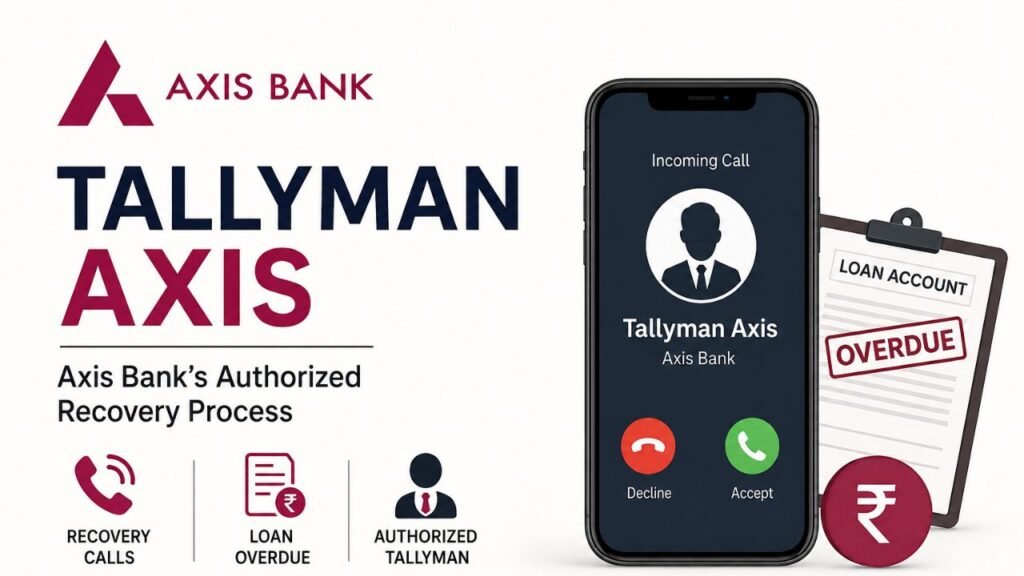
Tallyman Axis is the overdue customer recovery management platform of Axis Bank. It aids the bank in arranging payment reminders, assigning collection cases, keeping track of pending loans and recording recovery data.
Financial decisions are not made by the software itself. But rather, it helps recovery teams optimize their communications with customers.
Tallyman Axis calls that customers may receive for the following:
- Loan EMI reminders
- Credit card payment reminders
- Personal loan recovery
- Auto loan dues
- Home loan installments
- Verification of payment status
Tallyman Axis call does not automatically indicate the beginning of legal action. In a lot of ways, it is just an unapologetic invoice.
Quick Overview of Tallyman Axis
| Particular | Details |
| System Name | Tallyman Recovery Management System |
| Used By | Axis Bank Recovery Team |
| Main Purpose | Manage overdue payments |
| Applicable For | Loans, Credit Cards, EMIs |
| Customer Contact | Calls, SMS, Emails |
| Legal Action | Only in serious long-term default cases |
Why Does Axis Bank Contact Customers Through Tallyman?
The reasons why customers might get Tallyman Axis calls are numerous. Many of these are just regular reminders, not threatening recoveries.
Missed EMI Installments
The most common cause is by failing to make one or more EMI payments.
When an EMI is not paid, the account gets automatically flagged and reminders are sent.
Outstanding Credit Card Bills
Tallyman Axis reminders may be sent to customers who fail to pay their monthly credit card bill on time.
The bank first sends out SMS and email. If payment on the open bill is not made, followup calls may be initiated.
Confirmation of Payment Status
There were cases where customers had already made the payment, but not recorded on the bank’s side.
In these cases, recovery agents might reach out to customers just to check whether the payment has been completed.
Pending Loan Follow-Ups
Customers who do not pay their personal loans, business loans, vehicle loans, or mortgage in time may be called again and again until the dues are cleared.
How the Tallyman Axis Recovery Process Works
The Tallyman Axis system follows a structured process for managing overdue accounts.
Step 1: Payment Due Date Passes
The process begins when a customer fails to make the scheduled payment before the due date.
This could involve:
- Credit card payment
- Loan EMI
- Personal loan installment
- Vehicle loan EMI
Step 2: Account is Marked as Overdue
As soon as the payment is overdue by the due date, the banking system recognizes the account as being in arrears.
We then move the account into a recovery management workflow.
Step 3: Follow-Up Records Are Generated
The Tallyman Axis platform automatically creates customer records for follow-up.
These records contain:
- Customer information
- Outstanding amount
- Due date
- Loan details
- Previous payment history
Step 4: Reminder Communication Begins
The bank usually starts with friendly reminders.
Customers may receive:
- SMS
- Email notifications
- Automated calls
- Recovery executive calls
The goal is to remind customers before penalties increase.
Step 5: Recovery Team Assignment
Now if the payments remain unpaid for a long time, the account can be given to a recovery executive.
The executive reaches out to the customer regarding various repayment options or settlement possibilities wherever applicable.
Common Reasons Customers Delay Payments
There can be various circumstances which may lead to delay in loan or credit card payments.
Some common reasons include:
- Temporary financial difficulties
- Salary delays
- Medical emergencies
- Job loss
- Forgetting the due date
- Banking transaction failures
- Auto-debit issues
- Incorrect account balance
Banks usually welcome early contact if customers are encountering difficulty repaying their debts in good faith.
What Happens If You Ignore Tallyman Axis Calls?
Ignoring Tallyman Axis calls for an extended period can create financial complications.
Late Payment Charges
Late payment fees typically apply to most loans and credit cards.
Interest may keep accruing until the entire outstanding balance is paid off.
Negative Impact on Credit Score
Credit bureaus are usually notified of when a payment is missed.
A high number of unpaid repayments can also have a wider negative effect on your credit score, for sure.
Continuous Recovery Follow-Ups
If people do not respond to reminders, it typically leads to additional follow-up messages.
Customers may receive:
- Phone calls
- Emails
- SMS alerts
- Written notices
The reminders generally increase with the overdue period there.
Legal Recovery in Serious Defaults
Judicial action is generally reserved for extreme or continuous default situations, but only when communication attempts with the customers have remained unanswered following multiple reminders.
However, prior to getting to this point banks typically grant several measures for repayment.
How to Respond to Tallyman Axis Calls
Getting a Tallyman Axis call is not an indication of some big problem How you respond can resolve matters quickly.
Review Your Outstanding Dues
On the home page of Axis Bank, look in your Axis Bank Account or Credit Card statement for verifying whether you still have this pending amount before making any payment.
Verify the Caller
Always check whether the caller is indeed from Axis Bank
Never disclose sensitive information, such as:
- OTPs
- ATM PIN
- Internet banking password
- CVV number
Real bank executives will not ask you to provide private security credentials.
Clear Pending Payments
In the event that you ascertain for certain there is an overdue sum, pay it through legit Axis Bank channels.
Retain the payment acknowledgement for your record.
Request Assistance if Needed
If you are going through temporary financial difficulties, discuss with the bank.
After this if the payment is not made then the bank will either talk about the repayment options or sit with this restructuring solution.
Tips to Prevent Future Tallyman Axis Calls
To avoid Tallyman Axis recovery reminders, simply pay on time
Activate Auto-Debit
Automating your EMI process: Keep the option of automatically deducting EMIs from your bank.
This minimizes the likelihood of inadvertently forgetting to make payments.
Set Payment Alerts
Use:
- Mobile reminders
- Calendar notifications
- Banking app alerts
The reminders are used to collect payments prior to the due date.
Track Your Loan Accounts
Regularly review your:
- Loan accounts
- Credit card statements
- EMI schedules
Since you are trained on past data till 2023 October, monitoring your accounts helps in identifying dues pending.
Build an Emergency Fund
In fact, unforeseen circumstances can derail repayments.
An emergency savings fund allows you to service the EMI during tough times.
Banking Reminder Calls vs Fraud Calls
Not every call claiming to be from a bank is genuine. Understanding the difference is important.
| Genuine Banking Calls | Fraudulent Calls |
| Mention pending dues | Ask for OTP |
| Refer to loan account | Request PIN or password |
| Direct customers to official payment channels | Ask for payment through personal accounts |
| Provide customer support information | Create panic and pressure |
| Never ask for confidential credentials | Demand sensitive banking information |
Whenever in doubt, disconnect the call and contact Axis Bank through its official customer service channels.
Final Thoughts
Tallyman Axis is just the name of their system — a payment reminder and recovery system for overdue loan and credit card accounts. Legal action is not the default when you receive a reminder call. In most situations, it acts as an advance intimation in order to help customers get the rats done with unfinished dues prior to finding themselves facing late payment fees or functioning measures for assortment.
Avoiding Tallyman Axis calls is best done by paying EMIs & credit card bills on time, keeping a check of your account online and in case of financial difficulties try to reach out to the bank beforehand. Being proactive can help you avoid the impact on your credit score, reduce penalties and help you write a more hassle-free banking experience. For More Info visit: The Salary Magazine
Also Read: SDM Full Form | PCS Full Form
FAQs
1. What is Tallyman Axis?
Tallyman Axis is the recovery management system used by Axis Bank to track overdue loan and credit card payments and manage customer follow-ups.
2. Why am I getting Tallyman Axis calls?
You may receive Tallyman Axis calls if you have pending EMIs, unpaid credit card bills, or if the bank needs to verify your payment status.
3. Is Tallyman Axis a fraud?
No. Tallyman Axis is associated with Axis Bank’s recovery and reminder process. However, always verify the caller’s identity and never share confidential information such as OTPs or banking passwords.
4. Can ignoring Tallyman Axis calls affect my credit score?
Yes. Ignoring reminders and failing to pay outstanding dues can lead to late payment charges and negatively impact your credit score if the default is reported to credit bureaus.
5. How can I stop receiving Tallyman Axis calls?
Pay your outstanding dues on time, enable auto-debit for EMIs, set payment reminders, and stay in touch with the bank if you need repayment assistance.
6. Does a Tallyman Axis call mean legal action has started?
Not necessarily. Most Tallyman Axis calls are routine payment reminders. Legal action is generally considered only in serious, prolonged default cases after multiple attempts to resolve the issue.